-
When Martin Luther King Jr. landed in Memphis on April 3, 1968, no one knew he would be killed the next day. When he gave his famous "I've Been to the Mountaintop" speech, no one knew it would be his last. And when the world learned of his death, no one knew exactly how deeply his legacy would live on.
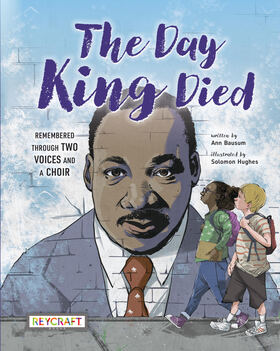
Interwoven with excerpts from "I've been to the Mountaintop" and "Precious Lord, Take My Hand" (the song played at King's funeral), The Day Kind Died recounts the last 24 hours of the prolific activist's life while reminding us how his teachings continue to endure.
-
It's important to remember that history is an attempt to make sense of events that unfolded in real time.
No one knew when Martin Luther King Jr. flew to Memphis on April 3, 1968, that he was taking his final plane ride. No one knew when he spoke that night at Mason Temple about having seen the mountaintop that he was giving his last speech. No one knew that "Precious Lord, Take My Hand" would be the subject of his final conversation. No one knew any of that until James Earl Ray fired those fatal shots as King stood on the balcony of the Lorraine Motel on the edge of evening, April 4, 1968. Barely an hour later, King was dead.
Until that moment it had been just another day. . .
King's lawyers had gone to court to fight for his right to march in support of the city's striking sanitation workers. His allies had gathered to discuss strategies for the planned march. His best friend and aide, Ralph Abernathy, had shared catfish with him off a room service plate for lunch. His brother had visited, and they'd made a teasing phone call to their parents, pretending each was the other. His colleagues had joined him in a playful pillow fight after they'd gotten good news from court. All of them had listened to musicians practice for that night's rally in support of the strike.
King's assassin may have intended to stop King's push for change with his bullets, but bullets can't stop ideas.
One reason I've written two books about this history is to try to extend the understanding young people have of King beyond his oft taught "I Have a Dream" speech. We do King a disservice when we present him as a two-dimensional figure—the man with a dream—without emphasizing how he dedicated his life, and lost it, trying to turn this dream into reality. As King knew, having dreams is important, but dreams can be painfully difficult to bring to life and regrettably easy to quash. So he fought on.
King's vision endures for a human family guided by respect and love. It echoes in the marching of thoughtful feet. It lives on in kindnesses offered to strangers. It pulses through the spirits of all who search beyond the surface to see the sparks of humanity that unite us regardless of how we look, what we believe, where we worship, whom we love, where we come from, or where we're headed.
-
The Timing of History
A program for children ages eight to twelve
By Ann BausumThe death of Martin Luther King Jr. was one of those moments that shocked the world and forever changed it. It can be easy to look back and accept this event as a settled point in history, but before it became the day Dr. King died, April 4 was just another day in 1968. This program explores the ordinary moments of this extraordinary time and helps young people consider how current events are transformed into history.
In fact, every day is history in the making.
Length: 45 minutes, including 20 minutes for questions and discussion
Technical requirements: LCD projector and projection screen
Virtual option: This program may be requested as a virtual presentation.
Optional add–on: Collaborative reading of the text with student and staff participants may be requested.
-
• The Day King Died: Remembered Through Two Voices and a Choir
• Publication date: June 11, 2024
• Reycraft Books
• $18.95 (hardcover), $9.95 (paperback)
• 32 pages
• Ages 8 to 12, grades 2 to 6
• Illustrated by Solomon Hughes
• Additional archival and contemporary photographs
• Back matter includes author's note, bibliography, and recommended reading
• ISBN 978-1-4788-8642-6, hardcover
• ISBN 978-1-4788-8643-3, paperback